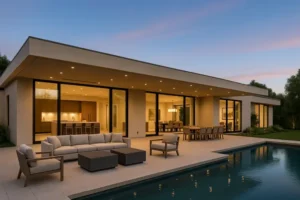
A well executed luxury kitchen and pantry design is not only about looks. It is a high performance structural zone inside the house that must safely carry heavy finishes, oversized islands, and professional appliances while controlling heat, moisture, and vibration for decades. In high end homes, the kitchen often includes a chef centered main space plus a hidden pantry or messy kitchen that keeps clutter out of sight. Done right, structure and architecture work together so the kitchen feels effortless but performs like a professional workspace.
In this article you will learn how luxury kitchen and pantry design impacts structural loads, floor framing, cabinetry supports, and mechanical pathways, why hidden pantries require precise engineering, and what to check before building or remodeling. You will also see practical strategies to prevent sagging floors, cracking stone, and ventilation conflicts in luxury homes.
What features does a luxury kitchen and pantry design include in high end luxury homes?
A luxury kitchen and pantry design usually combines a show kitchen with a concealed support pantry that handles storage and secondary prep. Architecturally, you will often see a large kitchen island, statement lighting, premium finishes, and full height custom cabinets. The pantry may be hidden behind a flush door or integrated cabinetry, giving the main kitchen a clean visual line.
Structurally, those features require deliberate engineering:
- Floor systems upgraded for concentrated loads under islands and heavy counters.
- Wall framing prepared for tall custom cabinetry and built in appliances.
- Ventilation and make up air routes planned early so ducts do not weaken joists.
- Moisture, fire, and acoustic detailing to protect structure and finishes long term.
If you want a wider context for how the kitchen fits into the whole residence, see luxury house design.
Why must luxury kitchen and pantry design start with structural load planning?
Because luxury kitchens are heavier and the loads are clustered. A standard residential floor design may be adequate for normal cabinets and light counters, but a luxury island with stone, appliances, and seating creates a dense point load. Without reinforcement, you risk floor deflection, vibration, or cracking at countertop seams.
Early structural load planning typically covers:
- Island dead load from stone and cabinetry.
- Live load from gatherings and seating.
- Appliance weight and dynamic forces like compressor vibration.
- Load paths down to beams and foundations.
This is exactly where Residential Structural Engineering Services in Denver protects your investment before finishes are ordered.
How does luxury kitchen and pantry design affect floor framing under a large kitchen island?
In luxury kitchen and pantry design, the island is one of the most demanding structural elements. A long island topped with quartz or granite can exceed assumptions made in generic floor layouts.
Common structural solutions include:
- Adding a beam directly beneath the island line.
- Doubling or tripling joists below the island footprint.
- Using engineered lumber such as LVL for higher stiffness.
- Installing solid blocking and bridging to reduce bounce.
- Increasing subfloor thickness to limit deflection.
If the island includes a sink or cooktop, the engineer also checks penetrations for plumbing and venting to ensure they stay within safe cut limits.
What role do countertop materials play in luxury kitchen and pantry design loads?
Countertops in luxury kitchen and pantry design are structural load cases, not just finishes. Heavy countertop materials like granite, quartz, and sintered stone add significant dead load. Waterfall edges and wide overhangs shift loads outward and increase bending on the cabinet structure below.
Key structural checks:
- Maximum safe cantilever length.
- Required hidden steel or corbel support.
- Cabinet rail and anchor capacity.
- Joint placement to avoid stress concentration.
Choosing a specific material should always be paired with a matching structural support strategy.
How should luxury kitchen and pantry design integrate high end appliances structurally?
Professional or smart kitchen appliances add weight and demand clean mechanical pathways. Ranges, built in refrigeration columns, steam ovens, and warming drawers can create both dead loads and heat output that affect structural detailing.
Structural coordination includes:
- Stiffening floors for appliance stability so units do not rock or transmit noise.
- Providing solid backing in framing for tall built ins.
- Routing ducts and make up air without overcutting joists.
- Fire safe and heat resistant assemblies behind high BTU ranges.
In large complex homes, especially with mixed use or event style kitchens, this level of coordination can resemble what is done in Commercial Structural Engineering Services in Denver or Government Structural Engineering Services in Denver.
What is a hidden pantry and how is luxury kitchen and pantry design used to build it?
A hidden pantry is a dedicated storage and prep space concealed behind cabinetry or a disguised door. It keeps the main kitchen visually calm while letting the household operate with real capacity. Many owners also use it as a messy kitchen for bulk cooking and appliance storage.
Structurally, a hidden pantry needs:
- Accurate door framing so concealed doors stay aligned and do not sag.
- Reinforced partitions for full height shelving loads.
- Continuous blocking for anchoring pull out towers and heavy cabinetry.
- Ventilation planning to avoid heat and moisture buildup.
If the pantry includes a second dishwasher, freezer, or small cooktop, fire separation and power pathways must be planned with the framing.
How does luxury kitchen and pantry design manage moisture, heat, and ventilation structurally?
Moisture and heat are the biggest threats to long term structural health in kitchens. In luxury kitchen and pantry design, durability depends on controlling both.
Structural and technical strategies:
- Using moisture resistant assemblies behind sinks and dishwashers.
- Coordinating duct routes before framing so structural members are not compromised.
- Providing make up air for strong range hoods to prevent pressure imbalance.
- Adding fire rated layers and heat shields behind pro appliances.
When these systems are not coordinated early, contractors may cut joists or beams for ducts, which is risky and expensive to fix.
How does luxury kitchen and pantry design support custom cabinetry and tall storage safely?
Full height custom cabinetry is a signature feature of luxury kitchen and pantry design, but it adds real load to walls and anchor points.
Safe structural detailing includes:
- Verifying stud layout matches cabinet modules.
- Adding continuous blocking at mounting rails.
- Anchoring tall pantry units into framing rather than only drywall.
- Checking lateral stability so long cabinet walls do not rack over time.
This matters even more in hidden pantries where shelving may store bulk items and small appliances.
How can luxury kitchen and pantry design reduce vibration and noise in open plan homes?
Luxury kitchens are expected to be quiet even with heavy use. In luxury kitchen and pantry design, noise control is mostly structural.
Effective measures:
- Stiff floor framing under islands to prevent rattling.
- Isolation pads or floating bases for compressors and dishwashers.
- Acoustic insulation in pantry partitions.
- Avoiding long unsupported spans in counters and cabinet runs.
These strategies keep the kitchen calm in open layouts where sound travels easily.
What structural checks should be done before remodeling a luxury kitchen and pantry design?
Before remodeling any luxury kitchen and pantry design, confirm what the structure can handle. Many remodels indirectly affect load paths even if you are not touching a primary beam.
Pre construction checklist:
- Identify load bearing walls near the kitchen.
- Verify floor capacity for a new island and stone.
- Design beams or joist upgrades if you are opening the plan.
- Review planned plumbing and ventilation penetrations.
- Budget for a professional inspection and understand structural inspection cost.
If your remodel includes removing posts or widening openings, you may need engineered solutions similar to Column Removal in Buildings.
When does luxury kitchen and pantry design require wider structural upgrades?
Sometimes the kitchen upgrade triggers changes elsewhere. In older homes, adding a heavier kitchen on an upper floor may require reinforcing the whole vertical load path. If you are expanding upward to create a bigger kitchen level, the engineering resembles Adding a Floor to an Old Building. If you are reshaping the yard or lowering grade to open kitchen views, site structures such as Retaining Wall Design may become part of the scope.
The point is simple: kitchen decisions can ripple into the whole building, so treat the kitchen as part of the structural system.
Practical experience: a structural first luxury kitchen and pantry design case study
In one high end home project, the owner wanted a 12 foot waterfall island with sintered stone, an island cooktop, and a hidden pantry behind flush cabinetry. The open plan also demanded a clean ceiling line with no visible drops.
Our structural approach included:
- Modeling the island as a concentrated dead load plus appliance load.
- Adding a concealed LVL beam beneath the island zone and doubling joists.
- Specifying a stiffer subfloor and tight blocking to control vibration.
- Coordinating duct pathways before framing so no critical joists were cut.
- Reinforcing pantry partitions with full height blocking for heavy pull out storage.
The result was a chef grade space with no floor bounce, no counter cracking, and quiet appliance performance from day one.
Conclusion
A memorable luxury kitchen and pantry design is built on structural certainty as much as style. When engineering leads alongside architecture, you get a kitchen that stays level, silent, safe, and durable under real life luxury use. The hidden pantry works like a professional support room, the island feels immovable, and ventilation protects the building for decades.
If you are planning a chef kitchen, a hidden pantry, or an open plan renovation, talk with ISTA Engineers early. We will align your vision with safe structural design and help you move forward confidently.
FAQ
- What features does a luxury kitchen and pantry design include?
Chef focused layout, large island, high end appliances, custom cabinetry, smart systems, and a hidden pantry with real structural reinforcement. - What is a hidden pantry and how is it designed in luxury kitchen and pantry design?
A concealed storage and prep room behind a flush door or cabinetry. It needs precise framing, blocking, and ventilation planning. - Do large kitchen islands need structural reinforcement in luxury kitchen and pantry design?
Often yes, especially with stone tops and built in appliances that create concentrated loads. - Which countertop materials create the biggest structural loads?
Granite, quartz, and sintered stone, particularly with waterfall edges or wide cantilevers. - Can I remove a wall to create an open luxury kitchen and pantry design?
Only after a structural engineer checks if the wall is load bearing and designs a safe beam replacement. - How do smart kitchen appliances affect luxury kitchen and pantry design structurally?
They add weight, vibration, and heat outputs, so floors and framing need stiffening and coordinated pathways. - What causes floor vibration near kitchen islands?
Long spans, insufficient joist stiffness, or unaccounted island dead load. - What ventilation issues matter most in luxury kitchen and pantry design?
High output ranges need large ducts and make up air. Poor planning can lead to unsafe pressure imbalance and moisture damage. - Does a hidden pantry need special fire or moisture treatment?
Yes if it includes appliances or heat sources. Fire rated layers and moisture control protect the structure. - When should I get a structural inspection for luxury kitchen and pantry design?
Before finalizing layout or ordering heavy finishes, so any necessary upgrades are designed early. - How is luxury kitchen and pantry design connected to the overall house structure?
Kitchens are heavy load zones. Island support, open spans, and duct routes must align with the main load system. - Is structural engineering needed if I only change cabinets?
If you add heavy counters, enlarge the island, move appliances, or alter walls, a structural review is strongly recommended.