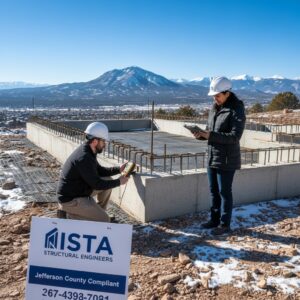
A structural inspection in Aurora is a comprehensive technical evaluation of a building’s load-bearing system, conducted by a licensed Professional Engineer (PE) to determine its safety, stability, and Structural Integrity. In the Aurora market which spans both Arapahoe County and Adams County these inspections are specifically designed to address the challenges of expansive bentonite soils and the heavy snow loads typical of the Colorado Front Range. Whether you are a homeowner in the Cherry Creek area or a commercial developer near Buckley, a structural inspection in Aurora provides the legal and technical assurance that your property can withstand the environmental pressures of the High Plains.
A professional structural inspection in Aurora serves as the definitive diagnostic for a property’s health, focusing on the Foundation, framing, and the continuity of the Load Path. By utilizing advanced diagnostic tools such as Digital Manometers and Ground Penetrating Radar (GPR), engineers identify hidden vulnerabilities that standard home inspectors frequently overlook. This evaluation ensures compliance with the International Building Code (IBC) and the specific mandates of the City of Aurora Building Division, resulting in a stamped Engineering Letter that is essential for real estate due diligence, insurance claims, and municipal permits.
What defines a professional structural inspection in Aurora?
A professional structural inspection in Aurora is a forensic-level audit of a building’s skeleton performed to verify its ability to support required loads safely. This process includes a meticulous review of the Foundation Footings, support columns, floor joists, and roof trusses to detect any signs of movement, rot, or material fatigue. Because Aurora contains a mix of mid-century ranch homes and ultra-modern high-density developments, the inspection must be tailored to the specific building era and the Soil Mechanics of the site.
Secure your property investment with a comprehensive assessment from licensed local engineers. We provide the technical clarity you need.
Call Our Team: (720) 740-4060The outcome of a structural inspection in Aurora is a formal report, authenticated with a Professional Engineer seal. This document is the gold standard for property assessments, providing a clear “Factor of Safety” analysis and, if necessary, an engineered repair design. For those seeking a comprehensive Structural Inspection service, this report is the primary instrument used to negotiate repairs during home sales or to secure the structural permits required for remodeling.
Why is high-altitude soil expertise required for Aurora engineering?
High-altitude soil expertise is required in Aurora because the city sits on a “geological transition zone” where deep deposits of expansive clay are prevalent. A Professional Engineer must understand how the local climate characterized by long dry spells followed by intense moisture events—causes these soils to exert immense pressure on foundation walls. Without this specialized knowledge, an inspector might misinterpret a standard settlement crack as a catastrophic failure, or conversely, miss a subtle sign of “heave” that could lead to a collapsed floor slab.
How do Aurora’s expansive soils impact structural integrity?
Aurora’s Expansive Soils are the leading cause of structural damage in the region, as the clay-rich earth expands with enough force to lift concrete footings and snap steel-reinforced basement walls. A structural inspection in Aurora focuses on detecting “differential movement,” which occurs when one portion of the house is pushed upward or downward while the rest remains stationary. This movement compromises the Structural Integrity of the home, leading to skewed door frames, cracked drywall, and potentially dangerous shifts in the Load Path.
The presence of Bentonite clay means that Aurora foundations must be engineered with specific drainage and “void” systems. During a structural inspection in Aurora, the engineer evaluates the efficacy of the perimeter drains and the site’s grading. If water is allowed to pool near the foundation, the soil expansion can lead to Hydrostatic Pressure buildup, which is the most common reason for foundation wall bowing in Arapahoe County residential properties.
Can a structural inspection in Aurora detect bentonite-driven foundation heave?
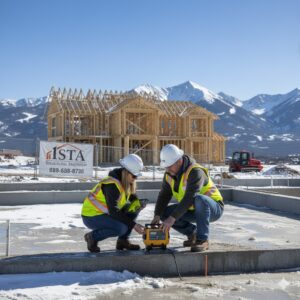
Yes, a structural inspection in Aurora can precisely identify “heave” the upward movement of a foundation caused by swelling Bentonite. Using a Digital Manometer, the engineer maps the elevation of the floor slab across the entire building. If the center of the basement floor is significantly higher than the edges, it indicates that the expansive soil is pushing the slab upward. This technical data is crucial for determining whether a property needs Helical Piers or if the issue can be managed through improved moisture control.
Why is a structural inspection in Aurora necessary for real estate transactions?
A structural inspection in Aurora is necessary for real estate transactions because it provides an unbiased, legally binding assessment of the property’s most expensive component: the foundation. In Colorado’s “buyer beware” market, a standard home inspection often identifies cracks but lacks the authority to determine their severity. A structural engineering report protects both parties by quantifying the cost of repairs and certifying the safety of the Structural Integrity before the closing date.
Need an engineer-stamped report? Our team delivers professional, high-standard structural inspections for properties throughout Aurora.
Request Your InspectionFurthermore, many lenders in the Aurora area now require a stamped engineering letter for properties showing signs of movement or for those with specific foundation types, such as pier and beam. By performing a structural inspection in Aurora as part of Real Estate Due Diligence, buyers can avoid “unforeseen” foundation repairs that can easily exceed $30,000 in the Front Range market.
How does the 36-inch frost line affect Aurora foundations?
In the Aurora area, the International Building Code requires all permanent foundations to be buried at least 36 inches below the finished grade to protect against Frost Heave. A structural inspection in Aurora verifies that footings for the main structure, as well as additions and decks, are at the correct depth to avoid the freeze-thaw cycle of the soil. If a foundation is too shallow, the frozen ground can “lift” the structure, causing severe cracking and instability.
During an inspection, our engineers pay close attention to unpermitted additions or patio covers where DIY builders often fail to dig deep enough. Identifying these shallow footings is a critical safety step, as a single hard winter can cause significant damage to the home’s primary Load Path. This is a core component of our Structural Inspection service for homeowners planning expansions.
Case Study
In 2025, ISTA Structural Engineers performed a forensic structural inspection in Aurora for a property in the Tallyn’s Reach neighborhood that was experiencing “door sticking” and basement floor cracking.
- Observation: The property sat on a site with high Bentonite content, and the homeowner had recently installed a new irrigation system.
- The Experiment: We used a Digital Manometer to map the slab and compared the data to the original “as-built” soil report.
- Discovery: The irrigation lines were leaking near the southwest corner, causing localized soil expansion that had heaved the slab by 1.8 inches.
- Outcome: We designed a localized moisture barrier and a “floating wall” adjustment, avoiding the need for expensive underpinning.
- Lesson Learned: A structural inspection in Aurora must always investigate the “moisture source” rather than just the crack itself to provide a cost-effective solution.
How does a structural inspection in Aurora differ from a standard real estate home inspection?
A structural inspection in Aurora is a specialized engineering audit, whereas a home inspection is a generalist’s overview of a house’s functional systems. While a home inspector looks at appliances, plumbing, and electrical outlets, a Professional Engineer focuses exclusively on the physics of the building. Home inspectors are generally prohibited by the American Society of Civil Engineers (ASCE) standards and state laws from providing repair designs or formal “stamped” opinions on structural safety.
| Feature | Standard Home Inspector | Structural Engineer (ISTA) |
| Credentials | Home Inspection License | Professional Engineer (PE) License |
| Primary Goal | Functional summary of systems | Certification of Structural Integrity |
| Analysis | Visual only | Technical & Mathematical |
| Legal Authority | None for structural design | Stamped Reports & Permit Designs |
| Tools | Flashlight, Moisture Meter | Manometers, GPR, Thermal Imaging |
When should owners schedule a structural inspection in Aurora for home additions?
Owners should schedule a structural inspection in Aurora before any architectural plans are finalized for a home addition, such as a second-story “pop-top” or a lateral extension. An engineer must verify that the existing Foundation and soil bearing capacity can support the increased Load Path of the new construction. In Adams County and Arapahoe County, a stamped engineering report is almost always required to obtain a building permit for structural changes.
By conducting a structural inspection in Aurora during the pre-design phase, you can identify if your current foundation needs reinforcement before you invest thousands of dollars in architectural drawings. For more information on preparing your home for an addition, you can visit our Structural Inspection service page or contact us directly.
What are the unique challenges of structural inspection in Aurora’s older ranch homes?
Aurora is famous for its mid-century ranch homes, which often feature “slab-on-grade” foundations that are particularly vulnerable to the Front Range’s soil cycles. A structural inspection in Aurora for these older properties involves checking for “structural fatigue” in original timber beams and evaluating whether original crawlspaces have remained dry over the decades. These homes often lack the modern Lateral Bracing required for high winds, making a structural audit essential before any interior walls are removed.
Contact ISTA Engineers for an authoritative structural inspection in Aurora. We provide thorough evaluations for residential and commercial assets.
Speak With An EngineerRemodeling these homes often involves the removal of Load-bearing walls to create open-concept living spaces. A structural inspection in Aurora is the only way to safely identify which walls are supporting the roof and to design the necessary steel headers to maintain the home’s Structural Integrity.
Does your Aurora property require a structural safety certification for decks?
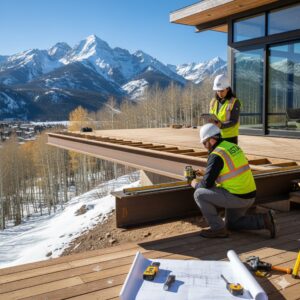
Yes, the City of Aurora has strict safety standards for elevated decks and balconies, especially those that serve as primary egress points. A structural inspection in Aurora can provide a safety certification to ensure that your deck’s ledger board is correctly flashed and anchored to the house’s Load Path. With the heavy snow loads in the Colorado winter, a poorly engineered deck is a significant liability that can lead to collapse.
Our engineers inspect the “uplift” resistance and the condition of the support posts. If you notice your deck “bouncing” or if the wood shows signs of rot, you should contact us for a professional evaluation. This certification is also increasingly required for homeowners looking to obtain Short-Term Rental (STR) permits in Arapahoe County.
Conclusion
A structural inspection in Aurora is the most vital step a property owner can take to protect their investment from the unique geological challenges of the Colorado Front Range. From diagnosing Expansive Soil heave to certifying a safe Load Path for a remodel, a licensed Professional Engineer provides the technical expertise and legal security that general inspections cannot.
ISTA Structural Engineers is dedicated to providing the Aurora community with forensic-grade assessments and stamped engineering solutions. Whether you are buying a home, planning a major renovation, or dealing with foundation cracks, our team is here to help. To schedule your structural inspection in Aurora, call us today at (720) 740-4060 or visit our contact us page to secure your property’s future.
Frequently Asked Questions
- How much does a structural inspection in Aurora cost?
Standard residential inspections in Aurora typically range from $600 to $1,800, depending on the property size and the complexity of the issue.
- Will the engineer provide a stamped report?
Yes, every structural inspection in Aurora performed by ISTA includes a formal, stamped report by a Colorado Professional Engineer.
- How long does a structural inspection in Aurora take?
An on-site visit usually takes 2 to 3 hours, and the final report is typically delivered within 5 business days.
- Can you tell me if a wall is load-bearing?
Yes, identifying Load-bearing walls for remodel planning is a common component of a structural inspection in Aurora.
- Do I need an inspection if I’m buying a new build in Aurora?
Yes, new construction in Aurora is frequently built on Expansive Soils; an independent inspection ensures the builder’s foundation system is performing correctly.
- Does a structural inspection cover mold or radon?
We focus on the Structural Integrity, but we will identify foundation cracks or moisture intrusion that can lead to mold or radon gas entry.
- What is the frost depth in Aurora?
The code-required frost depth for structural footings in Aurora is 36 inches.
- Can you inspect commercial buildings near Buckley SFB?
Yes, we provide comprehensive structural inspections for commercial, retail, and industrial properties throughout the Aurora area.
- How do I prepare for a structural inspection in Aurora?
Ensure the engineer has clear access to the basement/crawlspace, the attic, and the exterior perimeter of the foundation.
- Will the engineer recommend a specific contractor for repairs?
We provide unbiased repair designs; while we don’t perform the repairs, we can help you evaluate contractor bids to ensure they follow the engineering plan.