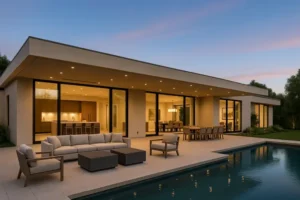
Classic luxury home construction is an enduring discipline that revives the order, elegance, and grandeur of ancient Greek and Roman aesthetics, demanding highly specialized structural support and construction precision. This style is rooted in the principles of neoclassical design, prioritizing Structural Symmetry and proportion to create spaces that feel both refined and powerfully stable. This construction style eschews light materials, relying instead on heavy, timeless Moulding (Plasterwork) details, exquisite materials like Marble, and rich, curated palettes which exert significant load.
suggestion: luxury house design
The Classic luxury home interior is defined by the Structural Integrity needed for Symmetry, Heavy Moulding (Plasterwork), and the use of high-density Materials. The Style: Neo-Classic relies on a muted base palette with rich jewel-toned accents to convey depth. Successfully executing this design requires a deep understanding of load-bearing capacity and dimensional precision, ensuring the grandeur is felt without compromising structural safety.
What is the defining Engineering challenge in Classic Luxury Construction?
Classic luxury home interior design emerged in the 18th century, but today, we must recreate its weight and complexity using modern building science. The Style: Neo-Classic looks back to the rational beauty of antiquity, focusing on clarity, order, and Balance, which in construction means perfect alignment and structural equilibrium. This is a construction choice that signals enduring taste and demands high-tolerance execution.
Why is Structural Symmetry (Symmetry) the Foundational Principle in Classic Luxury?
Symmetry is the most vital principle of neoclassical construction and the key to creating a truly harmonious Classic luxury home interior. It dictates that structural and finishing elements on one side of a central axis must be mirrored on the other. This sense of equilibrium creates a feeling of peace, stability, and formality that is instantly recognizable as luxury, but requires:
- Foundation Precision: The primary structural columns and load-bearing walls must be placed with absolute precision to guarantee the Symmetry of the final spaces.
- Load Distribution: Ensuring that two identical architectural features (e.g., massive built-in cabinets or stone columns) placed symmetrically exert an even and calculated load on the underlying slab.
- Focal Points: Centering a major element, such as a Marble fireplace or a grand Crystal Chandelier, means the floor and ceiling framing must be engineered to support the central point load exactly.
How Can Dimensional Precision and Order be Established?
Order and rationality are established by adhering to proportional rules and using defined geometric shapes. The structure of the room is emphasized through architectural detailing, making the precise framing of the space the primary decorative element. This involves careful planning to ensure every layer—from the wood framing to the thick plaster—conforms to the intended dimensions and angles.
The Heavy Weight of Grandeur: Engineering for Moulding and Finishes
The distinction between a standard home and a truly luxurious classical space lies in the three-dimensional detailing of the walls and ceilings, which introduces major dead load challenges.
How Do Heavy Moulding (Plasterwork) and Ornate Plaster Ceilings (ornate plaster ceilings) Impact Structural Load?
Moulding (Plasterwork) refers to the intricate trim applied to walls, ceilings (cornices), and doorways. These details are essential in Classic luxury home interior design, but the sheer volume and density of material used for Ornate plaster ceilings and heavy wall paneling significantly increases the dead load on the ceiling joists and roof truss systems.
- Load Calculation: Engineers must meticulously calculate the added weight of gypsum plaster, extensive wood trim, and Moulding to ensure the framing is adequately oversized, preventing deflection or cracking in the finishes.
- Attachment Mastery: The detailed, heavy plasterwork must be attached to the underlying structure using precise, concealed methods to ensure it remains perfectly level and secure for decades, resisting gravity and vibration.
- Suspended Weight: Large Crystal Chandelier fixtures weigh hundreds of pounds and require a dedicated, structurally anchored support box or steel frame integrated into the framing of the ceiling, completely independent of the plaster itself.
Structural Consultation: Achieving the level of structural support and dimensional precision required for heavy Marble finishes and detailed, high-density Moulding (Plasterwork) requires specialized expertise. For engineering consultation on supporting your classic luxury features, contact us at https://istaengineers.com/.
Engineering for the Load and Mass of Materials
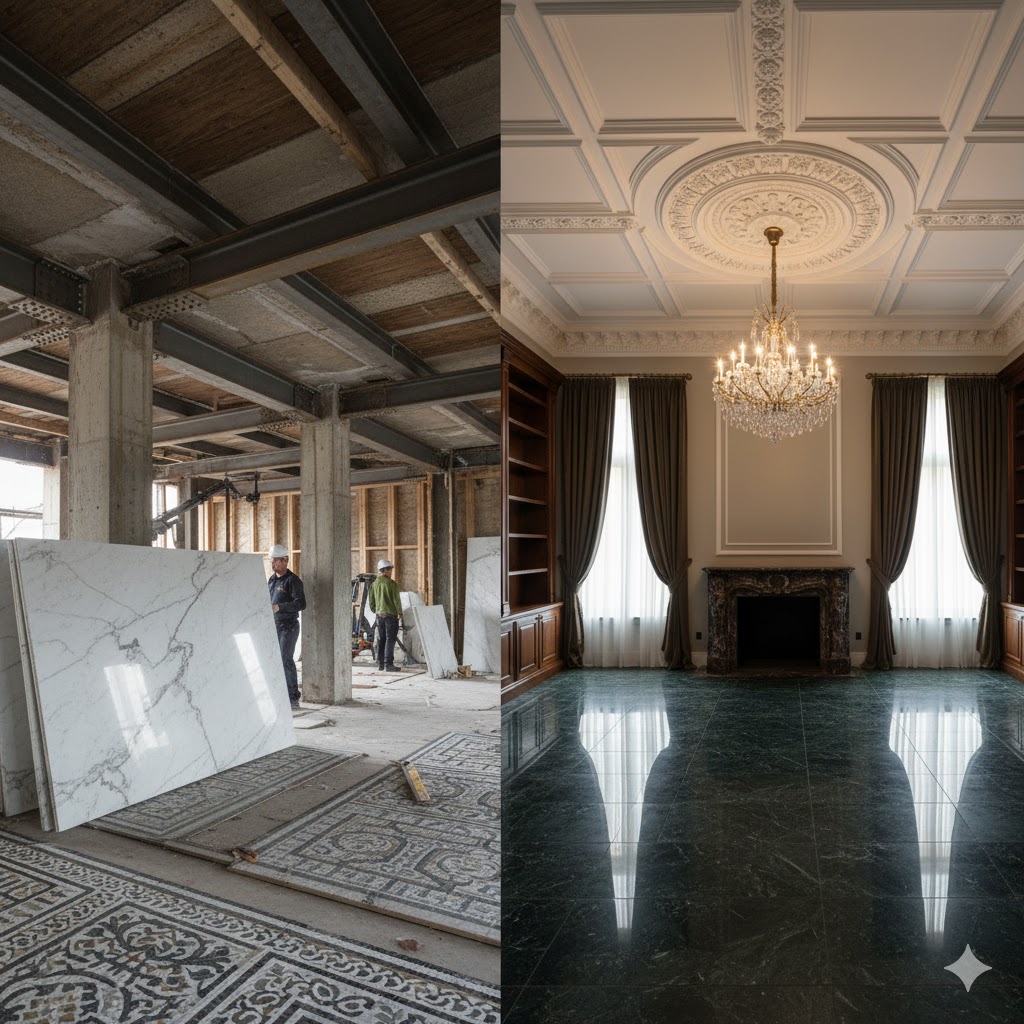
In this style, materials are chosen for their intrinsic quality, durability, and ability to age gracefully, which often translates to extreme weight.
What Materials and Construction Techniques are Essential in Classic Luxury Design?
The construction techniques must accommodate the massive weight of the chosen Materials.
| Category | Typical Materials | Structural/Construction Implication |
| Hard Finishes | Marble (Carrara, Statuario), high-grade wood (Mahogany, Walnut), Brass, Bronze. | Load Reinforcement: Floors must be framed to prevent deflection that would crack large-format Marble tiles. Sub-floors require structural stiffening for stone. |
| Architectural | Heavy plaster, wainscoting, decorative columns. | Anchoring: Wall framing must be robust enough to securely anchor heavy, non-load-bearing architectural elements. |
| Soft Finishes | Silk Fabric, Velvet Drapes, fine wool. | Detailing: Window headers must be perfectly level and structurally secure to support the immense weight of triple-layered Velvet Drapes hung on heavy decorative rods. |
Marble is indispensable, and its use for flooring, fireplaces, and countertops necessitates careful consideration of the sub-structure’s capacity to handle its unique high density and weight.
Why are Heavy Finishes and Antique Furniture (antique furniture) Critical?
- Heavy Finishes: The load of materials like Marble and thick plaster lends a feeling of permanence and opulence. The construction must ensure these heavy materials are installed on a surface that is plumb, level, and structurally stiff to eliminate movement and maintain flawless joints.
- Antique Furniture: Pieces of antique furniture (often 18th or 19th-century reproductions) are typically heavy, rich woods and must be positioned on a structurally sound floor. The engineering of the space must respect the furniture’s physical authority, ensuring sufficient circulation volume.
How to Update a Classic Luxury Space with Modern Structural Integration
It is possible to refresh a Classic luxury home interior without sacrificing its core elegance, blending the old with the new in a transitional style, which often involves integrating new structural technology into the old shell.
How to Update a Classic Luxury Space (How to update a classic luxury space) Without Compromising Structure?
To successfully update a classic luxury space, focus on integrating modern functionality:
- Structural Lighting Integration: Replace overly ornate fixtures with modern, streamlined fixtures. This requires modifying the ceiling structure to conceal modern track lighting or recessed fixtures while maintaining the structural support for the original ceiling height.
- Climate Control Concealment: Integrating efficient HVAC requires embedding linear vents and return air plenums into existing Moulding (Plasterwork) details or wall structures without compromising the historical finishes or load-bearing capacity of the walls.
- Acoustic Management: Large, high-ceiling rooms (common in Classic design) can have poor acoustics. Modernizing involves concealing acoustic panels behind aesthetically pleasing fabric or perforated wood panels that must be structurally mounted and fire-rated.
Conclusion
The Classic luxury home interior is a style of lasting quality, built on the timeless Design Principles of Symmetry and proportion, and achieved through specialized structural engineering and construction mastery. It relies on high-quality Materials like Marble and the secure attachment of heavy textiles like Velvet Drapes to convey its message of refined wealth and permanence. Whether you choose to fully embrace the Style: Classic or apply the rule of Symmetry to a transitional design, the result is always an elegant and enduring home environment that is engineered for longevity.
Ready to ensure the structural integrity and precision of your classic luxury project? For expert engineering and load-bearing analysis for high-end residential construction, contact our specialists at https://istaengineers.com/ today.
Frequently Asked Questions (FAQ)
1. Why is Symmetry so important from a construction standpoint?
Symmetry is the foundational principle because it demands precise structural placement and dimensional alignment throughout the framing. Any misalignment in the core structure (walls, columns) will be visually amplified by the mirrored finishing details, compromising the formal balance.
2. How does the weight of Marble and thick plaster affect floor framing?
The extreme weight of Marble and thick plaster increases the dead load dramatically. Floor framing must be oversized (e.g., using tighter joist spacing or thicker joists) to achieve a lower deflection rate, preventing movement that would cause hairline cracks in the expensive stone or plaster finishes.
3. What is the role of Moulding (Plasterwork) in relation to the wall structure?
Moulding (Plasterwork) details frame the space and add architectural interest. Construction-wise, it requires a perfectly flat and plumb wall substrate for installation. Heavy cornices and medallions must be securely anchored into the ceiling or wall framing with blocking to prevent gravity and vibration from causing separation.
4. How to update a classic luxury space while respecting its structure?
To update a classic luxury space, focus on integrating technology (e.g., HVAC vents, recessed lighting) by modifying non-load-bearing walls and ceiling spaces. The primary load-bearing elements and Symmetry of the original structure must be meticulously maintained.
5. What are the key structural requirements for installing a Crystal Chandelier?
A grand Crystal Chandelier is a massive point load. It requires a dedicated, structurally anchored steel or heavy wood blocking mounted directly to the ceiling joists or slab. This mounting system must be engineered to support the fixture’s weight, often hundreds of pounds, and is installed before the Ornate plaster ceilings are applied.
6. What construction tolerances are required for Symmetry and classic finishes?
Achieving perfect Symmetry and the alignment required for classical finishes demands extremely tight construction tolerances, typically less than $1/8$ inch (3 mm) deviation over a typical wall, significantly stricter than standard building practices.
7. Why are Ornate plaster ceilings considered a high-risk construction item?
They are high-risk because they involve installing heavy material overhead. They require specialized trades, secure structural anchoring, and zero tolerance for deflection in the framing above, as any structural movement will immediately lead to visible, irreparable cracking in the plaster details.
8. How is the load from Velvet Drapes managed in construction?
While seemingly light, custom, floor-to-ceiling Velvet Drapes with multiple layers and heavy decorative rods exert a significant pull on the wall. The window header must be backed with solid, continuous wood blocking that is securely fastened to the wall framing to support the load of the drapery hardware.
9. What are the structural needs for an antique Marble fireplace surround?
An antique Marble fireplace surround is extremely heavy and is considered a fixed piece of architecture. The floor structure directly beneath the fireplace and hearth must be reinforced (often requiring additional structural members or solid masonry) to safely support the concentrated weight.
10. Does Classic Luxury Interior Design require specialized building codes?
While standard codes apply, the use of heavy Materials and complex structural requirements (for high ceilings, large stone weight, heavy Moulding) often necessitates specialized engineering calculations that exceed minimum code requirements to ensure long-term performance and prevent costly finish failures.