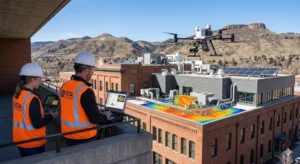
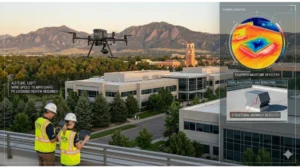
Foundation inspection in Boulder is a comprehensive structural diagnostic process performed by a licensed Professional Engineer to evaluate the stability of a building against the city’s notorious expansive shale and high-velocity floodplains. In Boulder, Colorado, this inspection is a technical necessity for mitigating the risks associated with the Pierre Shale formation and ensuring that both modern and historic structures comply with rigorous municipal safety standards.
For residents in zip codes such as 80304 or 80305, a professional foundation inspection provides a certified engineering report essential for real estate transactions, insurance valuations, and building permits. The evaluation utilizes Digital Manometer mapping and Forensic Engineering to identify subtle signs of upheaval or settlement. Unlike a standard home check, an inspection in Boulder specifically analyzes the interaction between the home’s footprint and the complex Alluvial Deposits characteristic of the Flatirons region.
Why is a foundation inspection in Boulder, CO (80304, 80302) different from other Front Range cities?
The geology of Boulder, particularly in the 80304 (Newlands) and 80302 (Mapleton) areas, presents a mix of ancient Stone Masonry and modern high-performance concrete. A foundation inspection here must be versatile enough to assess 19th-century lime mortar alongside 21st-century Post-Tension Slabs.
Furthermore, Boulder’s environmental regulations are among the strictest in the state. An inspection must account for the city’s Green Building and Residential Incentive Program (GBIS). In the foothills transition zones, engineers must also evaluate “slope creep” and the impact of heavy snowpack melt on Retaining Walls that support the primary foundation. This geographic diversity requires an inspector with specific expertise in Boulder’s unique soil-to-structure dynamics.
How does the “Pierre Shale” geological formation impact structural integrity in South Boulder?
In South Boulder (80305) and the Table Mesa area, the primary structural threat is the Pierre Shale. This formation contains highly expansive clay minerals that can exert upwards of 10,000 pounds of pressure per square foot when hydrated.
During a foundation inspection, we specifically look for “heave” the upward bowing of basement floor slabs. Because Pierre Shale is so aggressive, foundations that were not designed with Void Forms or deep Drilled Caissons often exhibit severe structural cracking. An engineering evaluation in this zone maps these pressure points to determine if the foundation’s “dead load” is sufficient to resist the swelling pressure of the underlying shale.
What specific Boulder building codes and floodplain regulations must an inspection satisfy?
A foundation inspection in Boulder must adhere to the City of Boulder Building Safety codes and the FEMA Floodplain management regulations. If a property is located within the 100-year floodplain (common near Boulder Creek or Skunk Creek), the inspection must verify that the foundation can withstand Hydrodynamic Loads and buoyancy forces.
Any structural letter or remediation plan must be signed and sealed by a Professional Engineer (P.E.) to be accepted for city permits. Boulder also has specific requirements for Radon Mitigation; since foundation cracks are the primary entry point for radon gas, the inspection must ensure that the structural “envelope” is sealed according to local health codes to prevent gas infiltration.
How does a professional foundation inspection in Boulder address historic stone foundations?
Boulder is famous for its historic districts like Whittier and Mapleton Hill, where many foundations are constructed of stacked stone or early unreinforced concrete. A specialized foundation inspection for these homes involves assessing the “binding” integrity of the mortar and looking for “bowing” caused by a century of lateral earth pressure.
Engineers look for evidence of Efflorescence (salt deposits), which indicates long-term water intrusion that can weaken stone footings. In these cases, the inspection report often focuses on Stone Pointing or the installation of an interior “sister wall” to provide modern structural support without compromising the historic character of the 80302 landmarked properties.
What are the primary indicators of expansive soil distress in Boulder residential properties?
In Boulder residential properties, the indicators of distress are often found in the relationship between the foundation and the “upper” structure. In the Gunbarrel (80301) area, look for diagonal cracks emanating from the corners of window frames and “frieze board” separation on the exterior.
Internally, an engineer performing a foundation inspection looks for “unlevel” floors using a high-precision altimeter. Other signs include basement windows that are pinched shut and “stair-step” cracking in the mortar joints of the foundation walls. In Boulder’s 80303 zip code, we also frequently see separation between the garage floor slab and the main foundation wall, indicating that the two structures are moving independently due to soil expansion.
[Case Study / Experiment]
Location: Boulder, CO (Zip Code 80305, Table Mesa neighborhood) Observation: A mid-century ranch home exhibited a 3-inch “hump” in the center of the basement floor and doors that would not close in the spring. Methodology: Our engineering team performed a Relative Elevation Survey and installed Crack Monitors to track movement over a 30-day period during the snowmelt season. Discovery: The foundation inspection revealed that the home was built directly on Pierre Shale without a structural floor system. The central bearing-wall was being lifted by soil heave. Outcome: We designed a remediation plan that included Moisture Stabilization and the installation of an active Perimeter Drainage system to keep the shale at a constant moisture content. Lesson Learned: In South Boulder, managing soil moisture is often more effective and less expensive than traditional piering when dealing with “upward” heave.
How do high groundwater levels near Boulder Creek impact foundation inspection results?
Boulder has a notoriously high water table, particularly in the low-lying areas of Central Boulder. During a foundation inspection, the engineer must check for “hydrostatic uplift,” where groundwater pushes against the bottom of the basement slab like a boat in water.
This pressure can cause the floor to crack and water to seep through the “cold joint” where the wall meets the floor. An inspection near the creek zones looks for evidence of sump pump over-activity and the presence of Iron Ochre (a bacterial sludge), which can clog drainage systems. If the water table is not managed, it can lead to “softening” of the soil beneath the footings, resulting in sudden settlement.
Why is a Professional Engineer’s seal mandatory for all Boulder foundation inspections?
The City of Boulder requires a Professional Engineer (P.E.) seal on all structural certifications because of the high risk associated with local geology and flood zones. A P.E. has the advanced mathematical training required to calculate the exact forces being exerted on a foundation by Expansive Soils.
The seal provides the homeowner with a “standard of care” guarantee. It ensures that the foundation inspection was conducted according to the high ethical and technical standards of the Colorado State Board of Licensure. For properties in high-value areas like Chautauqua, this seal is a prerequisite for title companies and lenders to finalize a sale, as it provides a legally binding assessment of the home’s structural health.
Conclusion
From the historic stone walls of Mapleton Hill to the aggressive shales of Table Mesa, a foundation inspection in Boulder is the only way to navigate the city’s complex structural landscape. Whether you are dealing with flood zone requirements or expansive soil heave, ISTA Engineers delivers the forensic precision needed to protect your Boulder investment.
Concerned About Your Boulder Foundation? Secure your property’s future with a data-driven evaluation from a licensed Professional Engineer.
Call Now: (720) 740-4060
Request a Consultation: istaengineers.com/contact-us/
FAQ – Foundation Inspection in Boulder
- How much does a foundation inspection cost in Boulder (80304)? A residential engineering foundation inspection in Boulder typically ranges from $650 to $950, reflecting the complexity of local shale and historic masonry.
- Is a foundation inspection required for a Boulder “SmartRegs” compliance? While SmartRegs focuses on energy, any structural changes made to reach compliance will require a sealed foundation inspection.
- Why is the “Pierre Shale” so problematic in South Boulder? It contains smectite clays that expand dramatically when wet, causing foundations to “heave” or crack under extreme pressure.
- Can a foundation inspection help with my Boulder radon problem? Yes. Engineers identify the structural cracks that allow radon gas to enter, providing a roadmap for sealing the foundation.
- What if my Boulder home is in a High Hazard flood zone? The inspection will include an analysis of the foundation’s ability to resist “scour” and hydrostatic pressure during a flood event.
- How do I know if my historic stone foundation is failing? Look for crumbling mortar (spalling), bulging walls, or significant moisture in the crawlspace, and then call for a professional engineering assessment.
- Will a foundation inspection identify why my basement is always damp? Yes, we evaluate the “hydrostatic head” around your home and the effectiveness of your exterior drainage and sump pump.
- Does Boulder require a permit for “helical piers”? Yes, and that permit must be supported by an engineering report and a P.E.-sealed site plan.
- What is a “Structural Floor” and do I need one in Boulder? A structural floor is suspended above the soil to allow for expansion; it is often recommended for new builds in high-swell Pierre Shale areas.
- How long does the on-site inspection take in Boulder? Given the complexity of local structures, expect the engineer to be on-site for 2 to 4 hours to ensure a thorough evaluation.