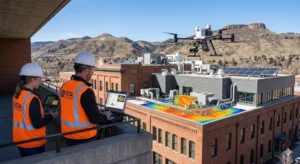
Foundation inspection in Lakewood is a specialized engineering evaluation designed to assess the structural integrity of buildings situated within the complex geological transition between the Great Plains and the Rocky Mountains. In Lakewood, Colorado, this process is essential due to the presence of sloping bedrock and varying soil compositions that can lead to lateral movement and settlement, requiring a licensed Professional Engineer to certify the safety and compliance of the structure.
For property owners in zip codes such as 80228 or 80215, a professional assessment provides the necessary technical data for real estate transactions, insurance claims, and municipal permits. The inspection utilizes high-precision Manometer surveys to map floor levels and identifies risks such as Foundation Creep or hydrostatic pressure from foothills runoff. Unlike a general check-up, a foundation inspection in Lakewood focuses on the intersection of residential construction and the aggressive topographical shifts of Jefferson County.
Why is a foundation inspection in Lakewood, CO (80228, 80215) unique compared to the rest of the Metro area?
The geology of Lakewood, particularly in the 80228 and 80215 areas, presents challenges that differ significantly from the flat plains of Eastern Denver. Homes here are often built on Colluvium soil that has moved down-slope over centuries which can be inherently unstable.
A specialized foundation inspection in Lakewood must account for “creeping” soils that put lateral pressure on uphill foundation walls. In neighborhoods like Green Mountain, the bedrock is often closer to the surface but tilted at an angle. This means that a home’s foundation may be resting on two different types of material (rock and soil), leading to Differential Settlement. An expert inspection quantifies these geological variables to ensure the home’s Footings are properly anchored into stable strata.
How does the “Foothills Transition” geology of Green Mountain impact structural stability?
The Green Mountain and Solterra districts in 80228 sit within a foothills transition zone where soil is often mixed with rocky debris. During a foundation inspection, engineers frequently find that these “mixed-state” soils lead to uneven load distribution.
Because the terrain is sloped, gravity plays a larger role in structural distress than in flatter cities. Hydrostatic pressure from mountain runoff can accumulate against the “high side” of a foundation, leading to inward bowing of basement walls. An inspection in this zone specifically looks for Shear Cracks and evidence of “rotation” in the foundation, where the house is physically tilting toward the downward slope of the lot.
What Lakewood building codes must a structural foundation inspection satisfy?
A foundation inspection in Lakewood must comply with the Jefferson County Building Division standards and the Lakewood Municipal Code. Any structural report intended for permitting or “Change of Occupancy” must bear the Professional Engineer (P.E.) seal.
Lakewood codes are particularly strict regarding Retaining Walls that exceed 3 feet in height and their proximity to the home’s foundation. The inspection must verify that the home meets the International Residential Code (IRC) requirements for frost protection and seismic bracing. If you are renovating a mid-century home in Eiber (80215), the inspection must also ensure that the original unreinforced masonry foundations are still capable of carrying modern structural loads.
How does a professional foundation inspection in Lakewood address steep-slope grading?
In Lakewood, grading is a structural component. A professional foundation inspection involves a detailed analysis of how the land “falls” around the building. On steep lots common in Bear Creek, the engineer must ensure that the “angle of repose” of the soil has not been compromised by erosion.
If the grading allows water to pool at the foundation’s base, it can lead to “soil saturation,” which reduces the bearing capacity of the earth. During the inspection, we evaluate the effectiveness of French Drains and Catch Basins in managing the high-velocity runoff typical of Lakewood’s foothills. Without proper slope management, even a structurally sound foundation can fail due to the surrounding soil being washed away.
What are the primary indicators of foundation creep in Lakewood residential properties?
For properties in the Belmar and Applewood areas, foundation “creep” is a common issue. Primary indicators include “stair-step” cracking in the exterior brickwork and gaps appearing between the house and the front porch or driveway.
Internally, an engineer performing a foundation inspection looks for “racking” of door frames where the top of the door is no longer parallel to the header. In Lakewood’s older 80226 neighborhoods, we often see basement floor slabs that have cracked and tilted toward the street. These indicators point to a foundation that is slowly moving horizontally due to the pressure of the sloping earth, a condition that requires immediate Soil Stabilization or Piering.
[Case Study / Experiment]
Location: Lakewood, CO (Zip Code 80228, Green Mountain area) Observation: A home built in the 1970s showed significant 4-inch settling on the downslope side, with large diagonal cracks in the walk-out basement. Methodology: Our team utilized a Digital Manometer Survey and Ground Penetrating Radar (GPR) to check for voids beneath the foundation footer. Discovery: The inspection revealed that the original Caissons were not deep enough to reach the stable bedrock, causing the house to “ride” on the moving topsoil. Outcome: We designed a remediation plan using Helical Piers to anchor the home directly into the bedrock, coupled with a new retaining wall to relieve soil pressure. Lesson Learned: In Lakewood’s foothills, traditional shallow foundations often fail over time; deep-foundation systems are necessary for long-term stability on sloped terrain.
How do seasonal runoff patterns in Jefferson County impact foundation inspection results?
Lakewood experiences intense seasonal runoff, especially during the “Spring Thaw” when snowmelt from the mountains saturates the ground. A foundation inspection conducted during this period may reveal active leaks or “weeping” through basement walls that would be invisible during a dry October.
The Expansive Soils in Jefferson County react quickly to this moisture. In 80227, the soil can swell, causing the foundation to “lift,” and then shrink during the dry autumn, causing it to “drop.” Professional engineers in Lakewood use these seasonal patterns to interpret crack patterns, distinguishing between “settlement cracks” (downward) and “heave cracks” (upward).
Why is a Professional Engineer’s seal mandatory for Lakewood foundation inspections?
A Professional Engineer (P.E.) seal is mandatory in Lakewood because foundation issues in this region involve complex physics and soil mechanics that a general contractor is not licensed to calculate. The City of Lakewood requires this seal for any document that certifies a building’s structural safety.
The P.E. seal acts as a guarantee that the foundation inspection was performed to the highest technical and ethical standards. For homeowners in Solterra or Applewood, this seal is your protection. It ensures that the structural report is legally defensible during a home sale and provides the engineering precision required to design a fix that won’t fail in five years.
Conclusion
Navigating the unique geological landscape of Lakewood requires more than a simple visual check. From the steep slopes of Green Mountain to the shifting soils of Belmar, a professional foundation inspection is the only way to ensure your home remains on solid ground. ISTA Engineers provides the hyper-local expertise and forensic tools needed to protect your Lakewood property.
Suspect Foundation Movement in Lakewood? Don’t wait for a minor crack to become a major structural failure. Schedule your expert inspection with a licensed Professional Engineer today.
Call Now: (720) 740-4060 Request a Consultation: istaengineers.com/contact-us/
FAQ – Foundation Inspection in Lakewood
- How much does a foundation inspection cost in Lakewood (80228)? A standard engineering foundation inspection in the Lakewood foothills typically costs between $600 and $900 due to the added complexity of slope analysis.
- Does Lakewood require a permit for foundation repair? Yes, any structural stabilization or repair in Lakewood requires a building permit backed by a P.E.-sealed engineering plan.
- Why is my Lakewood basement floor cracking in the 80226 area? Many older Lakewood homes have “floating” slabs that crack due to the high-clay content soil found in the flatter, eastern parts of the city.
- Will the inspection cover the retaining walls on my property? Yes, a comprehensive Lakewood foundation inspection includes evaluating any retaining walls that provide lateral support to the house.
- What is “soil creep” in Lakewood? Soil creep is the slow, downward movement of soil on a slope, which can push against foundation walls and cause them to tilt or bow.
- How long is a Lakewood structural engineer’s report valid? While conditions can change, most lenders and real estate agents accept a structural report for up to 6–12 months.
- Do I need a foundation inspection before buying a home in Green Mountain? Highly recommended. The complex geology of Green Mountain makes a structural engineering report a vital part of your due diligence.
- Can a foundation inspection detect hidden water damage? Using moisture meters and infrared cameras, an engineer can often find hidden saturation behind finished basement walls.
- What if my Lakewood home has a “crawlspace” instead of a basement? The inspection includes a full entry into the crawlspace to check for pier stability, wood rot, and soil moisture levels.
- Is it better to get an inspection in summer or spring? Spring is often better in Lakewood because the high runoff levels show the foundation’s performance under maximum hydraulic stress.