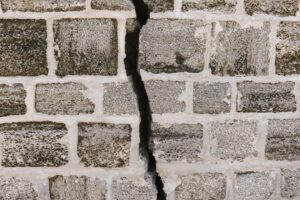
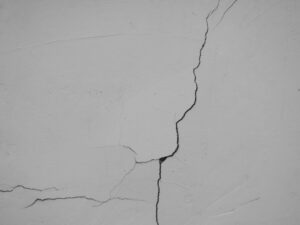
Homeowners searching for a certified foundation inspector usually run into the same wall I’ve watched clients hit for years: everyone claims certification, but almost nobody explains what that word is supposed to mean. After two decades evaluating foundations across the Front Range, from clay-heavy soils in Douglas County to the older slab-on-grade homes in Denver’s Platt Park, I can tell you plainly that “certified” is often marketing language rather than a legal credential. This article breaks down what actually carries weight when you’re hiring someone to inspect a foundation, how Colorado’s licensing system works, and how to verify who you’re really dealing with before you sign a contract. Learn more about meet ISTA’s licensed engineers.
Is “Certified Foundation Inspector” a Real License?
No single, standardized “certified foundation inspector” license exists at the state or federal level in the United States. There is no board that issues a credential with that exact title, no continuing education mandate tied specifically to those words, and no public registry you can search under that name. When a company advertises a “certified foundation inspector,” they typically mean one of three things: a Professional Engineer (PE) with structural experience, a home inspector with a private trade certification, or, in less rigorous cases, simply a technician who has performed foundation inspections without any state-issued license at all.
This matters because foundation problems are structural problems, and structural problems have legal and financial consequences. A misdiagnosed foundation crack can cost a homeowner $15,000 to $45,000 in unnecessary underpinning, or worse, allow a genuine structural issue to go untreated until it affects load-bearing walls or triggers a full foundation replacement. The word “certified” sounds authoritative, but in Colorado, the credential that actually holds legal and professional weight is a Professional Engineer license issued by the Colorado Department of Regulatory Agencies (DORA), not a certificate from a private training course.
Why the Terminology Gets Confusing for Homeowners
Part of the confusion comes from overlapping industries. Home inspection, structural engineering, and foundation repair contracting all touch the same physical object, a home’s foundation, but each operates under different licensing rules and different scopes of practice. A foundation repair contractor might complete a manufacturer’s installation certification for helical piers or push piers, which is a legitimate credential for installation work but says nothing about their ability to diagnose the root cause of settlement or differential movement.
Colorado does not currently license home inspectors at the state level, unlike states such as Texas or North Carolina. That absence of statutory licensing means anyone can call themselves a “certified home inspector” or “certified foundation inspector” in Colorado based purely on a private course completion, with no state oversight of their qualifications, insurance, or disciplinary history. This is precisely why understanding the difference between an inspector and an engineer becomes essential before you hire anyone to evaluate structural movement, cracking, or settlement in your home.
What Does a Colorado PE License Actually Mean, and How Do You Verify One?
A Colorado Professional Engineer (PE) license means an individual has passed the National Council of Examiners for Engineering and Surveying (NCEES) Fundamentals of Engineering exam, completed a minimum of four years of qualifying engineering experience under a licensed PE, passed the NCEES Principles and Practice of Engineering exam in a relevant discipline such as structural or civil engineering, and maintains that license through the Colorado DORA Division of Professions and Occupations with ongoing continuing education requirements. This is a state-regulated legal credential, not a marketing term, and it’s the only foundation-related qualification in Colorado that carries an enforceable code of professional conduct and public disciplinary record.
Verification takes about two minutes. The Colorado DORA licensing lookup tool lets anyone search a licensee by name or license number and confirm the license is active, see its original issue date, and check for any disciplinary actions on record. If an inspector or firm cannot provide a license number, or if that number doesn’t return a match on the DORA database, that is a legitimate reason to walk away before spending a dollar on their report.
What a PE Stamp on a Foundation Report Actually Certifies
When a licensed engineer stamps a foundation inspection report, they are legally certifying that the findings, calculations, and recommendations meet the applicable structural codes, typically referencing IBC Chapter 18 for foundation and soils requirements, ASCE 7 for load criteria, and applicable sections of the International Residential Code (IRC) for one- and two-family dwellings. That stamp exposes the engineer to professional liability if the report is negligent, which creates real accountability that a generic “certification” from a private course simply cannot replicate.
This distinction becomes especially important for insurance claims, real estate transactions, and legal disputes, where a stamped engineering report carries evidentiary weight that a home inspector’s narrative report typically does not. Firms offering PE-licensed foundation inspection services are staking their professional license on every finding, which is a fundamentally different level of accountability than a pass/fail checklist inspection.
What Other Credentials Might You See, and Do They Apply to Foundation Engineering?
You will frequently encounter ASHI (American Society of Home Inspectors) and InterNACHI (International Association of Certified Home Inspectors) credentials when researching foundation inspectors online. Both are legitimate, respected organizations within the home inspection trade, but neither certifies structural engineers, and neither credential authorizes the holder to perform engineering calculations, stamp structural drawings, or make code-based structural determinations.
ASHI certification requires members to complete a minimum number of paid inspections, pass the National Home Inspector Examination, and agree to a standards of practice and code of ethics. InterNACHI’s certification process similarly involves coursework and exams focused on general home systems: roofing, electrical, plumbing, HVAC, and basic foundation visual assessment. Both are valuable for a general pre-purchase home inspection, but neither organization trains members in soil mechanics, differential settlement analysis, retaining wall design, or the structural load calculations required to diagnose why a foundation is cracking or heaving.
Where Home Inspector Certifications Fall Short on Foundation Diagnosis
A general home inspector is trained to observe and report visible conditions, a crack wider than 1/4 inch, a door that sticks, a floor that’s out of level by more than 1 inch over 20 feet, but is not trained or licensed to determine whether that condition stems from normal concrete shrinkage, expansive clay soil (common throughout the Denver metro and Colorado Springs areas, where bentonite-rich soils are well documented), or a genuine structural deficiency requiring underpinning.
- ASHI and InterNACHI credentials cover general home systems, not structural engineering analysis
- Neither certification permits stamping engineering reports or performing load calculations
- Foundation repair contractors may hold manufacturer certifications for pier or helical anchor installation, which cover installation methodology, not diagnosis
- Only a Colorado-licensed PE can legally certify that a foundation repair design meets IBC and IRC structural requirements
- Many reputable home inspectors will recommend a PE evaluation themselves when they observe conditions beyond their scope, which is a good sign of professional honesty
Reading a foundation inspection vs structural inspection comparison helps clarify why these two service types are frequently confused yet serve very different purposes, especially when a homeowner is deciding which professional to call first after noticing a crack.
How Do You Verify a Foundation Inspector’s Credentials Before Hiring Them?
Verifying credentials before hiring takes five minutes and can save thousands of dollars in misdiagnosed repairs. Ask directly for the inspector’s Colorado PE license number, then cross-check it yourself rather than trusting a business card or website badge, since graphics and certificates can be fabricated or expired without anyone noticing.
The most reliable verification method is the Colorado DORA public license lookup, which is free, searchable by name or license number, and updated directly by the state regulatory division rather than by the individual or firm being searched.
A Practical Checklist for Verifying a Certified Foundation Inspector
- Ask for the engineer’s full name and Colorado PE license number in writing before scheduling
- Search that license number directly on the Colorado DORA lookup tool to confirm active status and check for disciplinary history
- Ask explicitly whether the final report will be signed and stamped by a licensed Professional Engineer, not just reviewed by one
- Confirm the firm carries professional liability (errors and omissions) insurance, typically $1 million or more in coverage for structural firms
- Request a sample report to see whether findings reference specific code sections (IBC, IRC, ASCE 7) rather than vague language like “appears stable”
- Verify the inspector’s experience with your specific foundation type, slab-on-grade, crawl space, or full basement, since diagnostic approaches differ significantly
Firms that also offer Structural Inspection services alongside foundation-specific evaluation tend to have broader in-house engineering depth, since foundation issues frequently connect to framing, load path, or bearing wall conditions elsewhere in the structure. You can review the qualifications of the team behind a report directly; for instance, you can meet ISTA’s licensed engineers and see their individual PE license numbers rather than relying on a generic “certified” claim.
Comparing Credential Types at a Glance
| Credential | Issuing Body | Legal Authority to Stamp Reports | Typical Scope |
|---|---|---|---|
| Colorado PE License | Colorado DORA | Yes | Structural diagnosis, calculations, code compliance, stamped drawings |
| ASHI Certification | American Society of Home Inspectors | No | General home systems, visual foundation observation |
| InterNACHI Certification | International Association of Certified Home Inspectors | No | General home inspection, basic checklist review |
| Manufacturer Pier Certification | Private pier/anchor manufacturers | No | Installation method training for specific repair products |
My Experience with Certified Foundation Inspector Claims in the Field
I’ve walked into more than a few basements where a homeowner had already paid a “certified foundation inspector” several hundred dollars for a report that turned out to be a single-page checklist with no calculations, no code references, and no license number anywhere on the document. In one case in Lakewood, a family was quoted $22,000 for helical pier underpinning based on that kind of report, when the actual cause of their wall cracking was a leaking gutter downspout saturating the soil next to the footing. Fixing the drainage and patching the cracks cost under $1,800.
I’ve also seen the opposite mistake, where a homeowner assumed any inspector was “engineer-equivalent” and skipped a proper structural evaluation before an addition, only to discover during permitting that the existing footing couldn’t support the new load without reinforcement. That project required a retroactive structural analysis and redesign that cost roughly three times what an upfront PE evaluation would have cost. Both situations trace back to the same root problem: nobody checked the license before signing a contract.
FAQ
What does a certified foundation inspector mean?
It generally refers to a professional who inspects foundations, but the term itself is not a standardized or state-regulated license in Colorado. The credential that actually carries legal authority is a Colorado Professional Engineer (PE) license, verifiable through the state DORA database, while other “certified” claims usually reference private home inspector training programs like ASHI or InterNACHI.
Is a PE license required for a foundation inspection?
A PE license is not legally required for a basic visual home inspection, but it is required if the report needs to determine structural cause, propose an engineered repair, or satisfy permitting and insurance requirements. Any report involving underpinning design, load calculations, or code compliance determinations should be stamped by a licensed engineer.
How do I verify an engineer’s license in Colorado?
Use the Colorado DORA public license lookup tool, searchable by the engineer’s name or license number, to confirm their license is active and check for any disciplinary history. This takes only a few minutes and is the single most reliable way to confirm you’re working with a properly licensed structural engineer rather than an unlicensed inspector using vague certification language.
What’s the difference between a home inspector and a structural engineer for foundation issues?
A home inspector performs a general visual review of the home’s systems and can flag potential foundation concerns, but cannot legally perform structural calculations, diagnose the engineering cause of movement, or stamp a repair design. A structural engineer holds a state-issued PE license, can determine root cause using soil and load analysis, and can produce a stamped report accepted by permitting offices, insurers, and courts.
Should I get a second opinion if my inspector isn’t a licensed engineer?
Yes, especially before agreeing to any foundation repair costing more than a few thousand dollars. A second opinion from a PE-licensed structural engineer costs far less than an unnecessary underpinning system and can confirm whether the original diagnosis was accurate before committing to a repair contract.
Sources:
Colorado Department of Regulatory Agencies (DORA)
National Council of Examiners for Engineering and Surveying (NCEES)