Should you get a foundation inspection before buying a house? If the home is more than a few decades old, sits on a sloped or expansive-soil lot, or the general home inspector flagged anything beyond a hairline crack, the answer is almost always yes — and the reasoning isn’t emotional, it’s financial. A pre-purchase foundation inspection means a licensed structural engineer physically evaluates the footings, walls, slab, and load path for movement, distress, or design deficiency, then puts the findings into a stamped report you can actually use at the negotiating table. Whether you need one, and when in your contract timeline to schedule it, depends on what the standard home inspection already turned up and what kind of property sits under contract.
Table of Contents
Does a Standard Home Inspection Already Cover the Foundation?
A standard home inspection does look at the foundation, but only in a limited, visual way that stops well short of the engineering evaluation a serious buyer needs before closing. A general home inspector walks the crawl space or basement, scans visible concrete or masonry, checks for obvious cracking, moisture staining, and uneven floors, and notes anything unusual — typically spending fifteen to thirty minutes on the foundation out of a two-to-three-hour visit that also covers the roof, electrical, plumbing, and mechanical systems.
That inspector is a generalist operating under InterNACHI or ASHI standards of practice, not a licensed engineer, and the scope of a standard inspection explicitly excludes structural analysis, load calculations, or subsurface soil evaluation. Under Colorado’s inspector licensing framework and the standard InterNACHI Code of Ethics most Front Range inspectors follow, the inspector is required to disclose observed conditions but is not permitted to render a professional opinion on structural adequacy or prescribe a specific repair method. If they see a crack wider than a hairline, differential settlement at a corner, or a bowing basement wall, the correct response under their own scope of practice is a referral to a structural engineer — not a diagnosis of severity or cause.
What a General Inspector Can and Cannot Tell You About a Foundation
A general inspector can document that a crack exists, roughly where it runs, and whether it looks active or dormant based on staining, dust accumulation inside the crack, or paint bridging across it. What they cannot tell you is whether that crack reflects a quarter inch of differential settlement or two inches, whether it came from ordinary concrete shrinkage during the first year after the pour, or from an undersized footing bearing on expansive clay that will keep moving every wet-dry cycle.
This distinction carries real weight across the Front Range, where expansive soils with bentonite clay content are documented from Douglas County through parts of Colorado Springs and up into Weld County. Homes built on these soils can show slab heave, wall rotation, or differential settlement that a thirty-minute walk-through simply isn’t equipped to quantify, measure, or explain. If a home inspector’s report includes a line such as “recommend further evaluation by a qualified structural engineer,” treat that sentence as a trigger for your next call, not as boilerplate language to skim past.
When Should You Get a Separate Foundation Inspection Before Buying a House?
You should book a dedicated pre-purchase foundation inspection whenever the property’s age, location, disclosure documents, or home inspection findings raise a specific concern that a generalist can’t resolve. This isn’t a blanket recommendation for every transaction — it’s a targeted decision built around a handful of defined triggers that experienced buyers and their agents learn to watch for.
In the files I’ve built over years of pre-purchase evaluations, the properties that needed a follow-up engineering visit almost always fell into one of these categories. Buyers who understand these triggers before the home inspection report lands can move immediately, rather than scrambling to find an available engineer with three days left in a contingency period.
- The home is older than 40 to 50 years, particularly pre-1980 construction that may predate current IRC foundation drainage, rebar, and reinforcement provisions found in Chapter 4 of the International Residential Code.
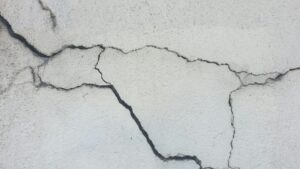
- The home inspector flagged visible cracking, especially diagonal cracks over 1/8 inch wide, stair-step cracking through masonry block joints, or a crack that runs continuously through both a slab and an adjacent foundation wall.
- The lot sits on a slope or in a documented expansive-soil zone, common across many Colorado foothill communities where swelling clay content can exceed 30 percent by soil weight.
- Seller disclosure mentions prior foundation repair — underpinning, helical piers, push piers, or wall bracing — since any past corrective work deserves independent verification rather than just a contractor’s old invoice.
- You want full certainty on a six- or seven-figure purchase, which is a legitimate reason on its own given how far remediation costs can outrun the price of an inspection.
Reading Foundation Warning Signs Correctly Before You Buy
Not every crack is a deal-breaker, which is exactly why an engineer’s measured opinion carries more weight than a buyer’s gut reaction to a crack spotted in a listing photo. Vertical hairline cracks under 1/16 inch in a poured concrete wall are typically shrinkage-related, appear within the first two years after the pour as the concrete cures and loses moisture, and are cosmetic in the overwhelming majority of cases.
Diagonal cracks radiating from window or door openings, horizontal cracking in a block wall — which often signals lateral soil pressure exceeding the wall’s design capacity under ASCE 7 lateral earth pressure assumptions — or a floor sloping more than 1 inch over a 20-foot run belong in a different category entirely. If you’ve already found cracks on your home inspection report, that finding is the moment to bring in a specialist rather than asking the listing agent for reassurance that the crack is “probably nothing.”
How Does a Foundation Inspection Before Buying a House Fit Into Your Timeline?
A foundation inspection needs to happen inside your inspection contingency period, which on most Colorado purchase contracts using the standard Colorado Real Estate Commission form runs 10 to 14 days from mutual acceptance. The engineering evaluation needs to occur early in that window, not on day 12, because you need time left over to negotiate, request repairs, or exercise a termination right if the findings turn out to be serious.
A licensed structural engineer can typically get on-site within 24 to 72 hours of a call, particularly with firms that run dedicated residential inspection teams rather than squeezing pre-purchase visits between larger commercial projects. The site visit itself usually runs 1 to 2 hours for a typical single-family home, covering the visible foundation perimeter, crawl space or basement, slab conditions, and the framing connections tied into the foundation system.
Turnaround Time for a Stamped Foundation Inspection Report
Most engineers deliver a written, stamped report within 2 to 5 business days of the site visit, though some firms offer expedited 24-to-48-hour turnaround for an added fee when a contingency deadline is tight. Ask about this directly when you book, because a verbal summary given on-site is reassuring in the moment but isn’t the document you’ll submit to a lender, a real estate attorney, or the seller’s side during negotiation.
Buyers working with a tight 10-day contingency should call an engineer the same day the home inspection report arrives, not after reading it cover to cover and discussing it over dinner. Coordinating site access with the listing agent — especially for occupied properties where the seller controls scheduling — can itself eat a day or two, so booking early protects the rest of your timeline and keeps your termination rights intact if the news is bad.
What Does a Foundation Inspection Before Buying a House Cost Compared to What It Protects?
A pre-purchase foundation inspection costs a small fraction of what it takes to fix a genuine structural problem after closing, which is the only comparison that actually matters when you’re deciding whether to spend the money. Foundation underpinning with helical piers commonly runs $1,500 to $3,000 per pier installed, and a home needing 8 to 12 piers to stabilize a settling corner can land well into the $20,000 to $40,000 range — figures that dwarf the cost of the inspection that would have caught the problem beforehand.
Rather than repeating detailed pricing tables here, the full breakdown by home size, foundation type, and region is covered on our dedicated page about what a foundation inspection costs, which is worth reviewing before you start calling around for quotes. What matters for this decision is the ratio: an inspection fee measured in the low hundreds of dollars protects against remediation costs running into the tens of thousands, plus the financing complications that come with discovering a major defect after you already hold the deed.
Insurance and Financing Consequences Buyers Often Overlook
Lenders occasionally require an engineering letter before closing if the appraiser notes visible foundation distress during the appraisal walkthrough, which can stall your loan by weeks if you haven’t already lined up an engineer to respond. Colorado homeowners insurance carriers have also grown more selective about foundation-related claims in recent years, and some policies specifically exclude coverage for pre-existing settlement or expansive-soil movement — meaning a defect you didn’t catch before closing may not be covered later even if it worsens after you move in.
A pre-purchase report also doubles as your baseline documentation going forward. If a crack widens two years after you move in, a dated, stamped engineering report from before closing lets you demonstrate what condition existed — or didn’t exist — at the time of purchase, which matters both for insurance claims and for any resale disclosure obligation you’ll eventually face as a seller yourself.
Can You Use a Pre-Purchase Foundation Inspection to Negotiate?
Yes — a stamped engineering report documenting a specific structural deficiency is one of the strongest negotiating tools available in a real estate transaction, stronger than a general inspector’s narrative notes because it quantifies the problem and often attaches a repair scope and cost estimate. Sellers and their agents generally take a licensed engineer’s findings more seriously than a buyer’s informal request based on a crack photo texted between agents.
Depending on your contract’s contingency language, a documented structural issue can support three different outcomes: a price reduction reflecting the estimated repair cost, a seller-funded repair completed before closing with a re-inspection to confirm the work meets spec, or, in the case of severe findings, outright termination of the contract with earnest money returned. Which path makes sense depends on the severity of the finding and how much you still want the house once you know what’s underneath it.
Negotiating With Measured Findings Instead of Adjectives
A report that states “estimated remediation cost $18,000 to $24,000 based on 10 helical piers at the northeast corner, per attached foundation repair contractor estimate” gives your agent something concrete to put in a counteroffer. Vague language like “foundation appears to have some settlement” gives the seller’s side room to argue, stall, or simply ignore the request.
This is also where comparing service types clarifies your options: a general Structural Inspection covers the full load path of a home — roof framing, floor framing, walls, and foundation together — while a Foundation Inspection narrows in specifically on footings, walls, and slab performance. For a pre-purchase scenario focused purely on foundation concerns, the narrower scope is usually faster to schedule and less expensive while still producing documentation you can actually negotiate with.
My Experience with Should You Get a Foundation Inspection Before Buying a House
Over the years I’ve performed these pre-purchase evaluations, the pattern that stands out most is how often the actual defect turns out smaller than the buyer feared, and how often it’s bigger than the seller admitted on paper. I inspected a 1962 ranch home near Arvada where the buyer was ready to walk away over a single stair-step crack in the block foundation; measured out, it ran 1/8 inch, showed no active movement based on dust accumulation inside the crack, and was consistent with ordinary seasonal expansion and contraction. We cleared it with a monitoring recommendation and the sale closed without any price adjustment.
Contrast that with a similar-vintage home in Highlands Ranch where the seller’s disclosure said nothing about foundation work, but crawling the perimeter turned up evidence of a prior partial underpinning attempt — pier caps that didn’t match the rest of the footing, inconsistent concrete coloring along one wall section, and a patched area of slab near the mechanical room. That finding, documented with photos and measurements in the report, led to a $15,000 price adjustment after the seller couldn’t produce permits or engineering records for the earlier repair. Neither outcome was predictable from listing photos alone, and that gap between what a camera shows and what a tape measure and a trained eye find is really the whole argument for bringing in a specialist before you’re the one holding the deed.
I’ve also seen cases where the home inspector’s report undersold a problem simply because the visible symptoms hadn’t caught up with the underlying movement yet. A newer build in Thornton, maybe six years old, showed almost no visible cracking, but a level survey of the slab picked up nearly 3/4 inch of differential settlement across a 30-foot span toward one corner — enough to warrant monitoring and a geotechnical referral before the buyer closed, even though nothing in the listing or the general inspection had flagged it. That’s the kind of finding you only get from someone trained to measure rather than just observe, and it’s why I tell buyers that a clean-looking foundation and a sound foundation aren’t always the same thing.
Comparing Inspection Types Before You Buy a House
Buyers often don’t realize how differently these two inspection types are scoped, priced, and reported, which makes a side-by-side comparison useful before deciding what to book. The table below reflects the typical scope differences I see across most pre-purchase transactions in the Denver metro and surrounding Front Range markets.
| Feature | Standard Home Inspection | Pre-Purchase Structural/Foundation Inspection |
|---|---|---|
| Performed by | General home inspector | Licensed structural engineer (P.E.) |
| Time on foundation specifically | 15-30 minutes | 1-2 hours dedicated |
| Scope | Visual observation, whole house | Structural analysis, measurements, load path review |
| Report type | General narrative checklist | Stamped engineering report with findings and recommendations |
| Typical cost | $300-$500 (whole-house) | $400-$800 (foundation-focused) |
| Usable for negotiation leverage | Limited | Strong, especially with cost estimates attached |
For buyers purchasing new construction, the comparison looks a little different, since there’s no settlement history to assess and the focus shifts toward verifying that footings, rebar placement, and drainage were installed to plan — something covered in more detail in our piece on new construction foundation inspection. And if the property in question has a basement rather than a crawl space or slab, the inspection scope shifts again toward wall deflection, waterproofing, and moisture int
Explore Foundation Inspection by City
- Foundation Inspection
- Foundation Inspection in Aspen
- Foundation inspection in Thornton
- Foundation inspection in Westminster
- Foundation inspection in Boulder
- Foundation inspection in Lakewood
- Foundation inspection in Broomfield
- Foundation Inspection in Aurora: Protecting Your Home’s Structural Integrity
- Foundation Inspection in Golden